For most companion birds, a species-appropriate pellet diet paired with fresh produce and limited seeds is a sound starting point, while wild birds need food and habitat suited to outdoor feeding. Could a familiar backyard feeder ever replace the care a companion bird needs at home? A species-appropriate pellet is a nutritionally formulated food in a size and ingredient formula intended for a particular bird species. Your bird’s species, age, and health shape its nutrition needs, so one menu cannot suit every bird.
Good variety matters, but a varied bowl is not always a balanced one. This article helps you choose food for companion birds, spot possible health concerns, and make thoughtful choices when feeding wild birds outdoors.
Key Takeaways
- Build a companion bird’s diet around pellets and fresh produce.
- Keep seeds limited, and introduce diet changes gradually.
- Learn which common kitchen foods can harm birds.
- Watch weight, feathers, energy, and droppings for changes.
- Store birdseed carefully and keep outdoor feeders clean.
Before changing a companion bird’s menu, match the plan to its species, age, and health.
What Should a Companion Bird Eat Each Day?
A typical companion-bird menu puts pellets first, adds fresh food every day, and keeps seeds to a smaller share. A balanced diet gives your bird a dependable base while leaving room for produce and variety.
For many birds, pellets make up 60-70% of the daily diet, with the exact balance adjusted for species, age, and health.
Build the base around pellets
Pellets provide vitamins and minerals in a complete commercial food. Formulas vary in ingredients and size to suit different species, so choose one intended for your bird. A seed-only diet can contribute to obesity, heart disease, fatty liver disease, and malnutrition.
Offer pellets beside the bird’s usual food during a gradual transition. Another bird eating pellets may encourage a reluctant bird to try them.
Some birds need time to recognize pellets as food. Keep the familiar food available as you offer pellets, and watch which items disappear. Avoid assuming that a bowl looks balanced just because it contains several ingredients.
Add fresh produce and limit seeds
A typical daily pattern includes 20-30% fresh food and up to 10% seeds. Fresh vegetables and a small offering of tropical fruit can accompany a nutritionally complete commercial pellet diet. Bell peppers, broccoli, carrots, sweet potatoes, squash, mango, papaya, and cantaloupe provide vitamin A.
| Diet component | Typical share | Practical role |
|---|---|---|
| Pellets | 60-70% | Base with vitamins and minerals |
| Fresh food | 20-30% | Daily produce variety |
| Seeds | Up to 10% | Limited part of the diet |
Fresh or thawed frozen produce works well; canned produce may contain too much salt or sugar. Wash produce thoroughly, introduce new foods slowly, and provide fresh water daily. Clean food and water dishes daily, since fresh food can sour or attract pests after a few hours.
Watch what the bird actually eats, rather than assuming an apparently full bowl means the menu is balanced.
Foods and Drinks Pet Birds Must Avoid
A few familiar kitchen foods can be dangerous to birds, so check ingredients before sharing anything. Keep known harmful foods and drinks away from companion birds, even when a small taste seems harmless.
Some hazards are toxic, while other foods simply offer little nutrition. The risks below apply to companion birds, not to the birdseed you put outdoors.
Foods and drinks that can harm birds
- Avocado: Persin in avocado leaves can cause heart damage, breathing difficulty, weakness, or sudden death.
- Caffeine: Coffee, tea, and other caffeinated items can raise heart rate, trigger arrhythmias or hyperactivity, and lead to cardiac arrest.
- Chocolate: Theobromine and caffeine can cause vomiting, diarrhea, a faster heart rate, tremors, seizures, or death.
- Onion and garlic: Onion can irritate the mouth, esophagus, or crop and rupture red blood cells; garlic can cause anemia and weakness.
- Fruit seeds and pits: Apple and pear seeds, plus cherry, apricot, peach, nectarine, and plum pits, contain a cyanide compound.
- Xylitol: Bird effects have not been studied in detail, so keep foods containing this sweetener away from birds.
Prepare fruit safely and choose nutritious vegetables
Remove apple and pear seeds, as well as pits from stone fruit, before serving fruit. Chopped fruit is easier to inspect, and you can check each piece as you prepare it. That small step helps keep a nutritious treat separate from its hazardous seeds or pit.
Iceberg lettuce is not toxic, but it has little nutritional value. Celery is also not toxic, though its high water content makes it a food to serve sparingly. Choose vegetables with more useful nutrients when planning regular fresh food.
If an ingredient is unfamiliar, check its safety with an avian veterinarian before offering it.
How Can You Spot Nutrition Problems?
A bird’s weight, feathers, energy, and droppings can reveal changes that deserve attention. Persistent changes may signal a nutrition problem or another health issue, but symptoms alone cannot identify the cause.
Weigh your bird weekly and note changes alongside its appetite, behavior, and droppings. A protruding keel bone, the ridge along the breastbone, can accompany weight loss and poor body condition.
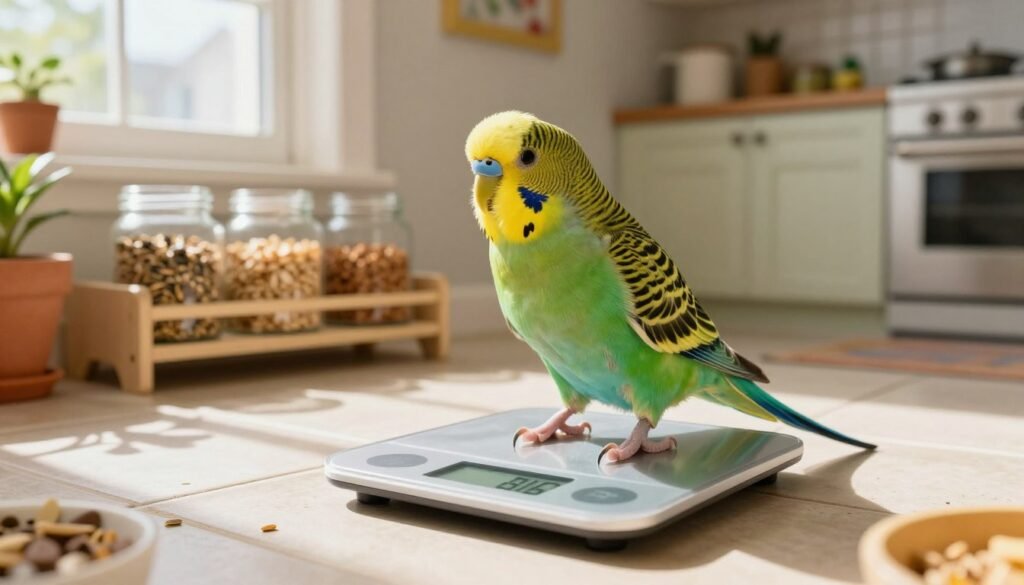
Recognize changes in weight, feathers, and behavior
General malnutrition can show up as weight loss, dull or malformed feathers, lethargy, and droppings with unusual color or consistency. Keep notes if a change lasts or appears with other signs. A brief record can help an avian veterinarian assess what is happening.
| Nutrition concern | Signs or consequences | Relevant detail |
|---|---|---|
| General malnutrition | Weight loss, dull or malformed feathers, lethargy, unusual droppings | A protruding keel bone may accompany weight loss |
| Vitamin A deficiency | Nasal discharge, sneezing, eye swelling, conjunctivitis, breathing difficulty | Chronic cases can cause white plaques around the mouth, eyes, or sinuses |
| Calcium and vitamin D3 imbalance | Weakness, ataxia, tremors, depression, seizures, pathologic fractures | UVB light in the 290-315 nm range is required for vitamin D3 activation |
Understand vitamin A, calcium, and vitamin D3 risks
Vitamin A deficiency can also bring increased urination and thirst, poor feather quality, feather picking, and loss of appetite. Chronic deficiency may produce white plaques around the mouth, eyes, or sinuses. These are warning signs, not a diagnosis.
Calcium and vitamin D3 imbalance can cause serious problems, including weakness, poor coordination called ataxia, tremors, depression, seizures, and pathologic fractures. In breeding birds, low calcium can be associated with thin-shelled eggs, reduced egg production and hatchability, embryonic death, egg binding, and cloacal prolapse.
UVB light in the 290-315 nm range supports vitamin D3 activation in birds. Increased urine after water-rich produce intake first rises can be normal, but an unexplained increase warrants veterinary attention. Arrange an avian veterinary visit for persistent or concerning changes.
Arrange an avian veterinary visit for persistent symptoms instead of trying to correct a suspected deficiency with supplements.
Store Birdseed and Keep Feeders Safe
Dry, shaded indoor storage helps birdseed keep its freshness, while feeder care lowers avoidable risks outdoors. Keep birdseed below 80°F (27°C); temperatures around 40-70°F (4-21°C) are best for preserving freshness and nutritional value.
Most birdseed lasts 6-12 months when stored properly. Seed type, temperature, and humidity affect how long it stays fresh, so check each bag rather than relying on a date alone.
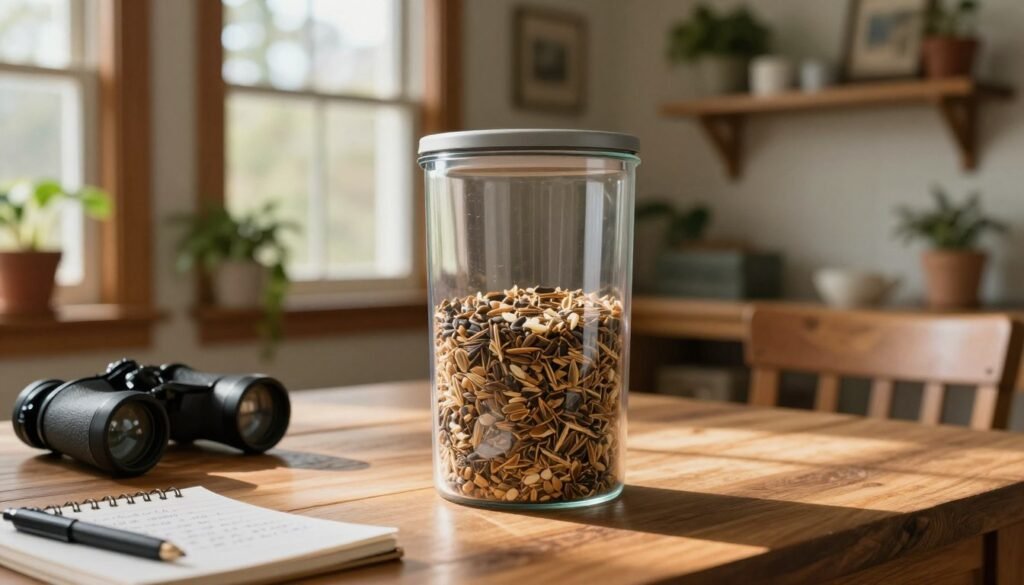
Keep birdseed fresh in storage
Use an airtight container in a cool, dry, shaded indoor place. Mark purchase dates and use older seed first. Throw seed away if it clumps, smells mildewy, or has holes in its bag, since those signs can point to moisture or pests.
| Food | Storage guidance | Key check |
|---|---|---|
| General birdseed | Airtight and cool; usually 6-12 months | Clumping, mildew smell, or bag holes |
| Nyjer | Protect from moisture | Clumping or spoilage |
| Suet | Keep cool; refrigerate or freeze before use | Keep it cool |
Nyjer seed needs extra protection from humidity because moisture can make it clump or spoil. Suet also needs a cool place, so refrigerate or freeze it before you put it out.
Reduce disease and collision risks at feeders
Clean most feeders at least once every two weeks. Hummingbird feeders need cleaning every 3-5 days. Regular cleaning lowers the chance that spilled food and crowded feeding spots will become a problem for wild birds.
Place a feeder within 3 feet of reflective windows, or cover the glass with decals or screening. Windows 15-30 feet from a feeder pose the greatest collision hazard. Choose placement with the glass and the feeding birds in mind.
Buy only as much seed as you expect to use while it is still fresh.
How Does Bird Food & Health Differ for Pets and Wild Birds?
Wild birds use backyard food as a supplement, while companion birds rely on a deliberately balanced daily diet. Outdoor feeding is one way to support feathered visitors, but it is not the same as planning food for a bird at home.
Backyard birds can find food in feeders and natural habitat. Your choices can offer seasonal options while encouraging wildlife to use the garden in more than one way.
Choose food and habitat for backyard visitors
These options can support different visitors without treating any single birdseed mix as a complete diet:
- Black-oil sunflower seed, a familiar option for many backyard birds.
- A varied seed mix; Pennington Nut & Fruit Blend includes black-oil sunflower seed, sunflower chips, peanuts, safflower, raisins, and dried cherries.
- Another varied mix; Pennington Songbird Food is made mainly of black-oil sunflower seed, with safflower, peanuts, and dried fruit.
- Native seed-bearing plants and fruit-bearing native shrubs, which add natural food to a backyard.
The two named products show how ingredients can vary between mixes; they are examples, not rankings. Native plants such as wingstem, perennial sunflowers, asters, goldenrods, and brown-eyed Susans produce seeds. Chokeberry, sumacs, and spicebush are fruit-bearing shrub options.
Balance the benefits and tradeoffs of wild-bird feeding
A 3-year study of 11 wild bird species, from spring 2011 to spring 2014, found mixed results at feeder sites. Birds there were generally in better overall health, yet disease prevalence was greater.
Feeding sites can bring birds together, and that gathering carries risks alongside any benefits.
At peak disease prevalence, 8.3% of birds at feeders showed symptoms of conjunctivitis, pox, dermal disease, or cloacal disease. Disease, predation, and collisions are all risks associated with congregating birds.
Start with one patch of native seed-bearing plants or a small section of lawn left unmown.
Conclusion
Healthy feeding starts with choosing food for the bird’s species and setting, not with adding more treats. Companion birds need a balanced, species-appropriate diet, while wild birds use outdoor food as a supplement to the resources around them.
For a companion bird, pay attention to what disappears from the bowl and how its weight, feathers, and behavior change. For backyard visitors, thoughtful feeding can sit alongside plants that offer natural food and cover.
Choose one manageable step at home: write down the foods your bird eats over several days. Book a wellness visit with an avian veterinarian and bring a brief record of the foods your bird actually eats.