
Does your parrot suddenly pin its eyes, lift its crest, or fan its tail—and should you keep interacting or give it space? Parrot body language is best read as a combination of signals, not a word-for-word code. A pupil change may show excitement, interest, fear, or irritation; posture, the surrounding situation, and your bird’s usual behavior help make the difference. This guide explains 12 common cues, safer ways to respond, and the changes that deserve an avian-vet call.
Quick answer: Pause and look at the whole bird. Relaxed balance, soft feathers, and voluntary approach often support continuing gently. A stiff body, repeated leaning away, tail fanning with other tense cues, an open beak, or a lunge means stop reaching and let the bird choose more distance. No single gesture proves what a parrot feels.
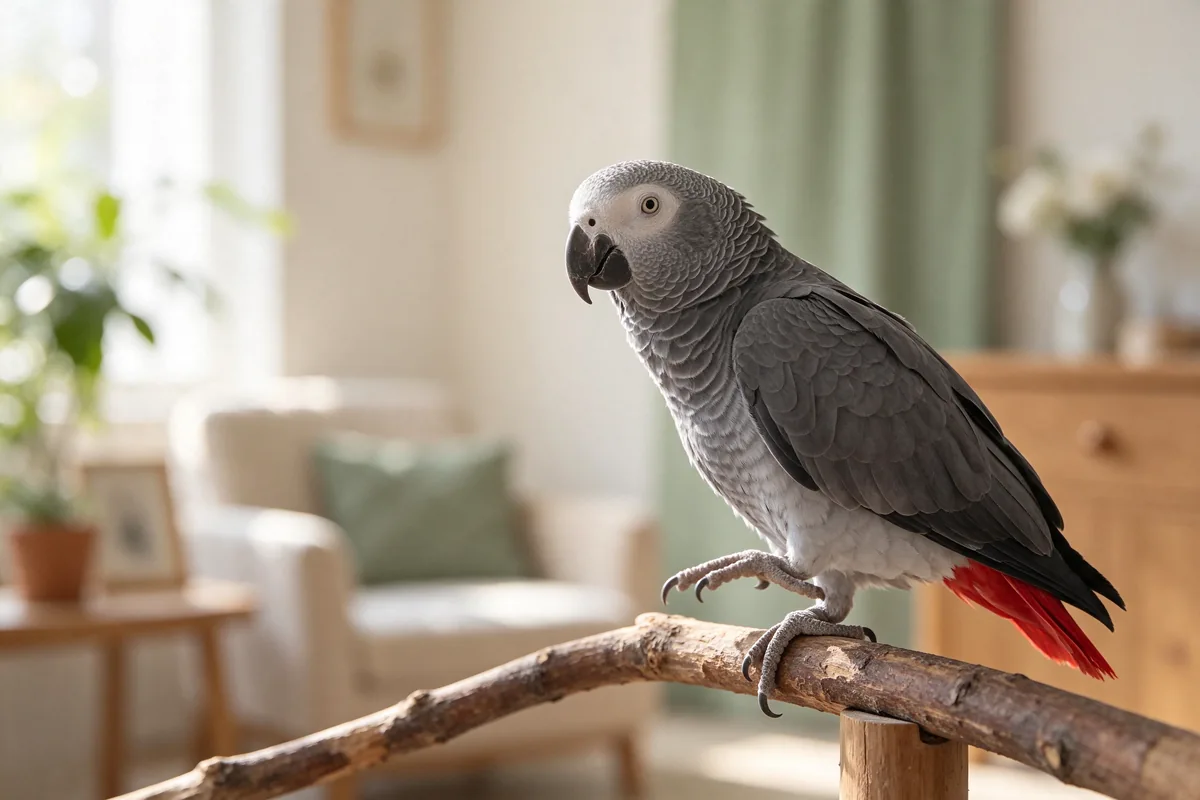
- Read the whole bird
- Quick signal guide
- Eyes, feathers, and posture
- Tail, wings, beak, and sounds
- How to respond safely
- When a behavior change may mean illness
- Frequently asked questions
How to Read Parrot Body Language: Start With Context
Parrots communicate through posture, eyes, feathers, movement, and sound. These clues can help you decide whether to offer interaction or pause, but the same cue can have different meanings in different species and individual birds. LafeberVet’s avian-veterinary handout recommends observing visual and vocal communication to judge whether a companion bird is receptive or needs time to settle. Read LafeberVet’s bird-body-language handout.
First learn your bird’s normal resting posture, preferred distance, voice, and daily rhythm. Then ask what happened just before the cue: did a hand approach, a visitor enter, a favorite food appear, or a loud sound occur? Finally, check whether several body parts tell the same story. A cockatiel’s crest, for example, can rise with interest or alarm; it is not a stand-alone “happy” or “angry” label.
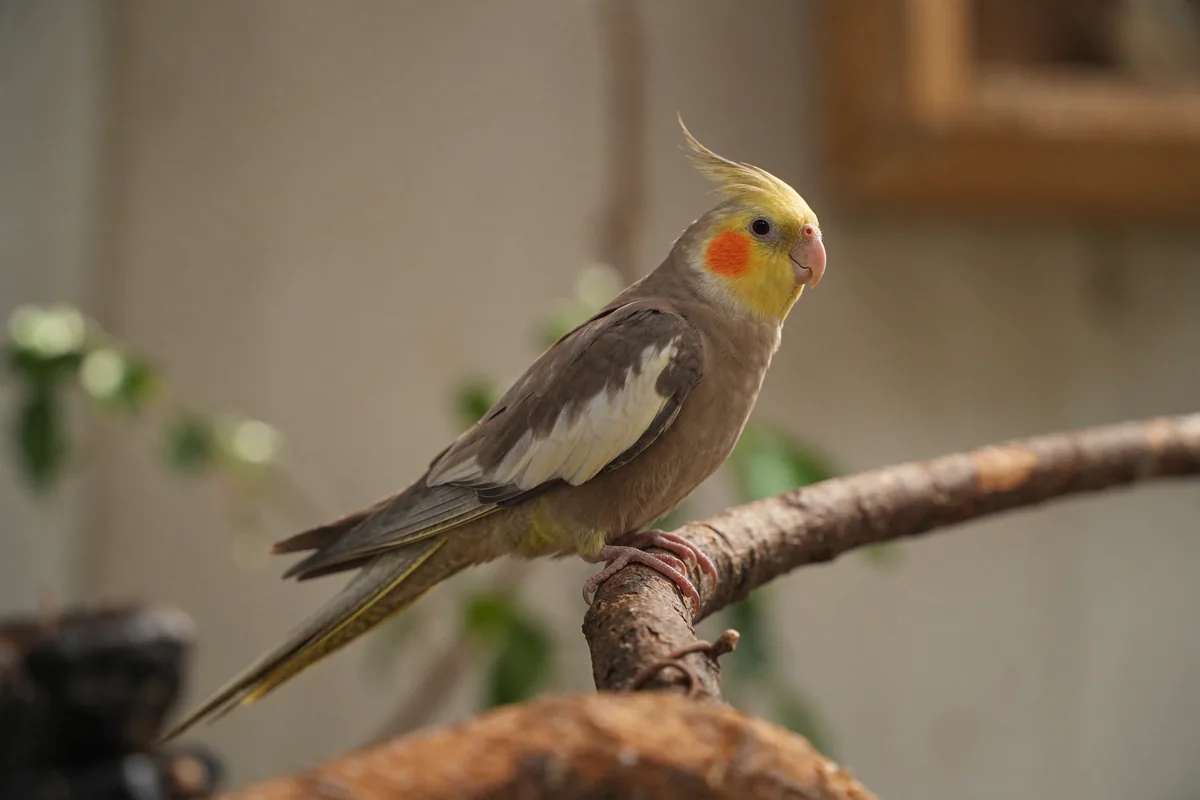
Parrot Body Language: 12 Common Signals at a Glance
Use this table as a prompt to observe, not as a diagnosis or a guaranteed translation. If the bird moves away or becomes tense, pause and give it a choice.
| Signal | What it may suggest | Safer response |
|---|---|---|
| 1. Rapid pupil “pinning” | High arousal: interest, excitement, fear, or irritation | Check posture and trigger before approaching |
| 2. Crest changes | Attention or heightened emotion in crested species | Read with body tension, voice, and movement |
| 3. Brief feather ruffle | Preening, settling, or a momentary shake | Observe whether the bird returns to normal |
| 4. Persistent fluffing at rest | May signal illness, especially with low energy | Contact an avian veterinarian if unusual or paired with other changes |
| 5. Leaning or stepping away | Discomfort or a request for more distance | Stop moving closer; let the bird choose |
| 6. Tail fanning with a rigid stance | Strong arousal; may be a warning display | Do not reach in; calmly create space |
| 7. Tail wag after greeting | Can accompany excitement, but meaning varies | Check the whole posture and what happened first |
| 8. Wing stretch or brief flap | Stretching, exercise, or display | Usually observe; persistent drooping is different |
| 9. Open beak, hiss, or growl | A warning or strong discomfort, depending on context | Stop handling and allow retreat |
| 10. Gentle beak grinding | Often heard as a bird settles to rest | Leave a relaxed bird undisturbed |
| 11. Singing, chatter, or calls | Social contact, practice, attention, or alarm | Notice timing, volume, and the bird’s posture |
| 12. Freezing, crouching, or lunging | Fear, defensive arousal, or a need for space | Pause, avoid cornering, and retreat calmly |
What Eyes, Feathers, and Posture Can Tell You
Eye pinning is a clue, not a verdict
Some parrots rapidly narrow and widen their pupils. This is often called eye pinning or flashing. It can happen during intense interest or excitement, but it can also accompany fear or defensive behavior. If pinning appears with a stiff body, fanned tail, raised feathers, an open beak, or a forward lunge, stop approaching. If your bird is relaxed and moving voluntarily toward a familiar treat, the picture is different. Read the surroundings and the whole posture.
Feather position depends on duration and the rest of the body
A brief ruffle can occur during normal settling or preening. A bird may also raise feathers during an excited display. By contrast, persistent fluffing while quiet, inactive, or unusually sleepy deserves attention—particularly if appetite, droppings, balance, or breathing has changed. Merck Veterinary Manual notes that bird illness may first appear as subtle changes in behavior, posture, appetite, or activity. See Merck’s pet-bird illness guidance.
Posture and distance are useful consent cues
A balanced bird that remains nearby by choice is easier to approach than one that freezes, stretches away, retreats along the perch, or repeatedly tries to leave. Do not test how close you can get. Pause, lower the pressure, and allow the bird to move away. A calm, voluntary return is more useful information than a bird that stays still because it has nowhere to go.
Reading Tail, Wing, Beak, and Vocal Signals
Tail and wing movements need context
A widely fanned tail can appear in displays and may accompany heightened arousal. If it comes with rigidity, eye pinning, a hiss, or a lunge, give the bird space. A single wing stretch or short flap may simply be movement or exercise; it is not the same as ongoing drooping. A tail that bobs with each breath, especially when the bird is resting, is a potential breathing warning rather than a social signal.
Beaks and sounds can signal more than one thing
Some birds use the beak to explore or steady themselves while climbing. Clicking, hissing, or growling can occur during a warning, but interpret these sounds with the bird’s position and what is nearby. Gentle beak grinding is often heard as some parrots settle for sleep; LafeberVet links to a short example video of a sleepy red-bellied parrot. Watch the sleepy-parrot example on YouTube.
For a broader visual walkthrough, this Bird Body Language 101 video from Flock-Talk covers interpreting behavior sets, defensive cues, feathers, tail, posture, and eyes. It is an educational resource, not a substitute for veterinary assessment.
How to Respond Safely When Your Parrot Looks Uneasy
- Pause. Stop your hand or training cue and avoid sudden movement.
- Make space. Turn slightly aside or step back without chasing or cornering the bird.
- Offer a choice. Let the parrot remain on its perch or move away; do not force a “step up.”
- Notice the trigger. Record what happened, the time, and the signals you saw.
- Resume only if the bird re-engages calmly. Keep sessions short and reward voluntary behavior with an appropriate treat or praise.
Never punish a warning signal. If growling, lunging, or biting is new or increasing, review the environment, routine, sleep, and handling approach; pain or illness can also change behavior. The complete beginner’s guide to pet bird care covers safe housing, enrichment, and gentle training. You may also find our guides to why a cockatiel may scream and parakeet care basics useful; species and individual birds differ.
When a Behavior Change May Need an Avian Veterinarian
Body language cannot diagnose an illness. Contact an avian veterinarian when a change is persistent, unexplained, or appears with other health changes. Birds can hide illness, and signs may be subtle; Merck advises watching small changes in appetite, behavior, posture, and activity. LafeberVet’s clinical review lists lethargy, weakness, appetite or weight loss, persistent fluffed feathers, altered droppings, discharge, and respiratory effort among signs that warrant attention.
| What you notice | What to do |
|---|---|
| Persistent fluffing with unusual sleepiness or reduced activity | Call an avian veterinarian promptly for advice |
| Eating less, weight change, unusual droppings, or reduced ability to perch | Arrange veterinary assessment; note when the change began |
| Open-mouth breathing, obvious effort to breathe, or tail bobbing with each breath at rest | Seek urgent veterinary care; do not wait for a behavior cue to pass |
| Sudden collapse, severe weakness, injury, or inability to perch | Contact an avian or emergency veterinarian immediately |
Keep your bird calm while arranging care and avoid giving human medicine or attempting home treatment unless a veterinarian tells you to. For a veterinary overview, see LafeberVet’s guide to signs of illness in birds. This article is general education, not a diagnosis.
Frequently Asked Questions About Parrot Body Language
Does eye pinning always mean a parrot is angry?
No. Rapid pupil changes can accompany several kinds of arousal, including interest, excitement, fear, or irritation. Check what happened just before and look at posture, feathers, tail, and movement.
Are fluffed feathers a sign my parrot is happy?
Not by themselves. A brief ruffle may be part of settling or preening, while persistent fluffing with lethargy or other changes can signal illness. Compare with your bird’s normal behavior and call an avian vet if concerned.
How can I tell when my parrot wants space?
Repeatedly leaning away, retreating, freezing, becoming rigid, or combining a fanned tail with other tense signals are reasons to pause. Give the bird room rather than reaching closer to “test” its reaction.
Why does my parrot bob its tail?
Context matters. Some movement can accompany activity or vocalizing, but a tail bob that follows each breath while the bird is resting may indicate respiratory effort. Contact an avian veterinarian urgently if breathing looks difficult.
Can a video teach me to read my own bird?
Videos can help you notice cues, but your bird’s species, personality, history, and surroundings matter. Use examples as learning aids, then compare them with your bird’s own relaxed baseline and ask an avian veterinarian or qualified behavior professional if a new behavior worries you.
Conclusion: Listen to the Whole Bird
The safest way to understand parrot body language is to watch the whole bird, compare it with its normal baseline, and respect signs of withdrawal. Pause when cues are tense or unclear; respond to persistent health changes with an avian-vet call. Calm observation and voluntary interaction build better communication than guessing what one gesture means.
Sources and Further Reading
- LafeberVet — Reading Bird Body Language (Christal Pollock, DVM, DABVP, Avian Practice).
- Merck Veterinary Manual — Introduction to Disorders and Diseases of Pet Birds.
- LafeberVet — Recognizing Signs of Illness in Birds.