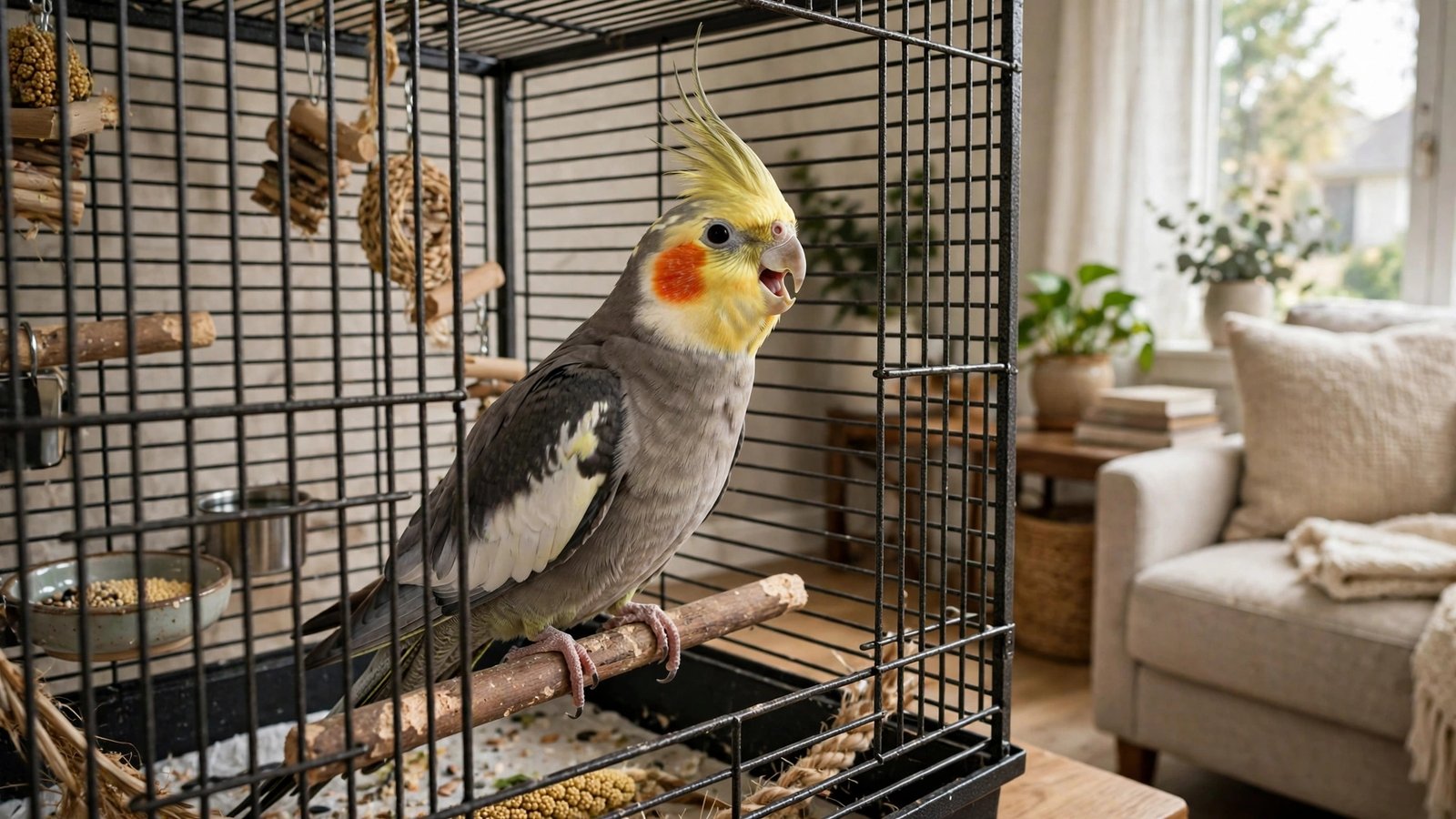
Is your cockatiel screaming throughout the day, calling loudly when you leave the room, or making so much noise that you can barely concentrate? You are not alone. Cockatiels are social, expressive birds, and vocal communication is a normal part of their behavior.
However, frequent or unusually loud screaming can sometimes indicate boredom, fear, stress, an unmet need, or a health problem. Understanding why your bird is making noise is the first step toward helping it feel comfortable and secure.
In this beginner-friendly guide, you will learn seven common reasons cockatiels scream, how to recognize each one, and what you can do to reduce excessive vocalization without frightening or punishing your bird.
Quick Answer: Why Is My Cockatiel Screaming?
A cockatiel may scream to communicate with its human flock, request attention, express boredom, react to frightening sounds, signal an unmet need, respond to hormonal changes, or communicate discomfort.
Start by checking food, water, safety, sleep, and your bird’s overall health. Then identify patterns in the screaming and use positive reinforcement to reward calmer sounds. Never yell at, hit, or punish your cockatiel for vocalizing.
Some morning and evening calling is perfectly normal. The goal is not to stop every sound. It is to understand your cockatiel’s needs and reduce excessive screaming while allowing natural communication.

1. Your Cockatiel Is Calling Its Flock
Cockatiels are naturally social birds. In the wild, they use different calls to communicate with other members of their flock and maintain contact when individuals move out of sight.
Inside your home, you and your family become an important part of your cockatiel’s social environment. When you walk into another room, leave for work, or become unavailable, your bird may start screaming to find out where you are.
This behavior is often called a contact call. It is especially common when a cockatiel hears people moving around but cannot see them.
How to recognize flock calling
- Your cockatiel screams when you leave the room.
- It becomes vocal when you arrive home.
- It calls repeatedly until someone responds.
- It becomes quieter when it can see or hear you.
How to reduce excessive contact calling
Instead of shouting back, teach your cockatiel a quieter way to communicate. For example, you can whistle a short, consistent tune whenever you leave the room.
When your bird responds with a quieter whistle, answer it calmly. You can also reward appropriate vocalizations with attention or a small healthy treat.
Gradually, your cockatiel may learn that it can maintain contact without screaming repeatedly.
According to the Association of Avian Veterinarians, contact calls help flockmates keep track of each other, and in captivity they can escalate into screaming if they are never acknowledged. The AAV also notes that training can replace a loud contact call with a more pleasant sound, such as a whistle.
2. Your Cockatiel Wants Your Attention
Sometimes, screaming becomes a learned way of getting attention.
Imagine that your cockatiel screams while you are working. You immediately walk over, talk to it, open its cage, or offer a treat. From your bird’s perspective, screaming has successfully brought you closer.
Even negative reactions, such as yelling or rushing toward the cage, can accidentally reward the behavior because your bird receives attention.
How to recognize attention-seeking screaming
- Your cockatiel screams when you stop interacting with it.
- It becomes louder when you ignore it.
- It quiets down when you approach its cage.
- The behavior happens repeatedly at similar times of day.
How to stop attention-seeking screaming
Build a predictable daily interaction routine. Give your bird attention before it becomes frustrated, rather than waiting until it starts screaming.
Reward calm behavior whenever possible. For example, if your cockatiel sits quietly on its perch, offer praise, gentle interaction, or a small treat.
Once you are sure your bird is safe and its needs are met, avoid rushing to the cage every time it screams. Instead, wait for a quiet moment and reward that, so screaming stops being the fastest way to get a reaction.
Important: Never ignore sudden, unusual, frightened, or distress-related screaming. First make sure your cockatiel is safe and healthy.
3. Your Cockatiel Is Bored or Understimulated
Cockatiels are intelligent birds that need daily mental and physical stimulation. A cage with only food, water, and one perch may not provide enough opportunities for natural activities.
Without appropriate enrichment, your cockatiel may become frustrated and develop repetitive screaming or other unwanted behaviors.
Boredom is particularly likely when a bird spends many hours alone without toys, interaction, or opportunities to explore.
Signs of boredom
- Your cockatiel screams during long periods without interaction.
- It spends much of the day sitting without engaging with its environment.
- It repeatedly seeks your attention.
- It shows little interest in its cage surroundings.
How to keep your cockatiel mentally active
Provide several bird-safe toys and rotate them regularly to maintain interest. Suitable options may include:
- Shreddable paper and cardboard toys.
- Bird-safe wooden chewing toys.
- Foraging toys that encourage natural food-searching behavior.
- Safe climbing structures and appropriately sized perches.
- Simple training activities using positive reinforcement.
Offer supervised time outside the cage in a bird-proofed room. Short training sessions can also help your cockatiel stay mentally engaged.
Remember that adding more toys is not always enough. Your bird also needs regular social interaction and opportunities to exercise.

4. Your Cockatiel Is Frightened by Something
Cockatiels can be sensitive to unfamiliar sounds, movements, and changes in their surroundings. A sudden noise or unexpected object may trigger an alarm call.
Common household triggers include:
- Vacuum cleaners and loud appliances.
- Sudden movements near the cage.
- Unfamiliar visitors or other household pets.
- Shadows moving across walls.
- New decorations or objects near the bird.
- Sudden changes in the location of its cage.
Some cockatiels also experience night frights. During these episodes, a bird may panic in the dark, flap around its cage, and scream.
How to help a frightened cockatiel
First, identify the possible source of fear. Approach slowly, speak in a calm voice, and avoid sudden movements.
Keep the cage in a relatively quiet area where your bird can observe normal household activity without being constantly disturbed.
If your cockatiel experiences nighttime panic, check for injuries and consider whether its sleeping environment needs adjustment. A dim night-light may help some birds, although individual responses vary.
Never grab a frightened bird unless immediate safety requires it. Give it time to settle before attempting interaction.
5. Your Cockatiel Has an Unmet Basic Need
Sometimes the reason for screaming is surprisingly simple. Your cockatiel may be hungry, thirsty, uncomfortable, or unable to access something it needs.
Although cockatiels cannot explain their needs in words, they can use vocalizations and body language to communicate that something is wrong.
Check these basic needs
- Food: Is fresh, appropriate food available?
- Water: Is the drinking water clean and accessible?
- Comfort: Is the cage too hot, cold, noisy, or exposed to drafts?
- Perches: Are the perches comfortable and appropriate for your bird?
- Cleanliness: Is the cage clean and free from obvious sources of discomfort?
- Interaction: Has your cockatiel had enough social time and supervised activity?
What should you do?
Make a quick daily checklist and inspect your bird’s environment whenever the screaming begins unexpectedly.
Keep feeding and cleaning schedules consistent. Provide fresh drinking water and a balanced diet appropriate for cockatiels.
Do not assume that every scream is an attempt to get attention. A bird with an unmet need may be communicating genuine discomfort.
6. Hormonal Changes May Be Affecting Your Cockatiel
Hormonal behavior can influence a cockatiel’s vocalizations, especially during periods associated with breeding activity.
Some birds become more territorial, vocal, possessive, or interested in nesting areas. They may scream when someone approaches a favorite location or when their preferred person moves away.
Common triggers include dark enclosed spaces, nesting materials, nest-like hiding spots, long hours of daylight, and petting that goes beyond the head and neck.
Possible signs of hormonal behavior
- Increased territorial behavior around certain cage areas.
- Frequent courtship displays or unusual repetitive vocalizations.
- Increased interest in dark spaces or nesting areas.
- Changes in attachment or possessive behavior.
- More frequent attempts to find secluded places.
How to manage hormonal behavior
Remove access to inappropriate nesting spaces, such as dark boxes or enclosed areas that encourage nesting behavior.
Give your bird a consistent sleep schedule with enough dark, quiet rest each night (many avian vets suggest around 10 to 12 hours), and avoid keeping it in bright light late into the evening.
When petting your cockatiel, focus on the head and neck rather than the back, wings, or body. Body petting can encourage reproductive behavior in some parrots.
If your bird shows persistent hormonal behavior, consult an avian veterinarian for individualized advice. Female cockatiels that lay eggs may also need veterinary guidance because repeated egg laying can create serious health risks.
7. Your Cockatiel May Be Sick or in Pain
One of the most important things to remember is that sudden changes in vocal behavior can sometimes be associated with illness or pain.
Birds often hide signs of illness, so a change in behavior should never automatically be treated as a training problem.
If your normally quiet cockatiel suddenly starts screaming unusually, or if its calls sound different, investigate the situation carefully.
Warning signs to watch for
- Reduced appetite or sudden changes in drinking habits.
- Weight loss or noticeable changes in body condition.
- Fluffed-up feathers for extended periods.
- Unusual droppings.
- Difficulty breathing or tail bobbing with each breath.
- Weakness, loss of balance, or difficulty perching.
- Discharge from the eyes, nostrils, or mouth.
- Feather damage or unusual self-plucking.
What should you do?
Contact an avian veterinarian if your cockatiel displays a sudden change in vocal behavior, especially when accompanied by other unusual symptoms.
Do not attempt to diagnose or treat the problem with human medication or home remedies.
Never delay veterinary attention because you assume the bird is simply being noisy or demanding attention.

When Should You See a Veterinarian?
Not all screaming requires a veterinary appointment, but certain symptoms should never be ignored.
Arrange an appointment with an avian veterinarian if:
- Your cockatiel suddenly develops a new or unusual screaming pattern.
- Its appetite, activity, or behavior changes noticeably.
- You observe abnormal droppings or weight loss.
- Your bird repeatedly appears uncomfortable or distressed.
- Excessive screaming continues despite appropriate environmental and behavioral changes.
Seek urgent veterinary attention if your cockatiel has difficulty breathing, cannot perch, experiences bleeding, has a seizure, or becomes extremely weak.
Do not wait for several symptoms to appear before seeking help. Birds can deteriorate quickly when seriously ill.
For help finding an avian veterinarian in the United States, visit the Association of Avian Veterinarians and use its veterinarian resources.
How to Reduce Cockatiel Screaming: A Simple Daily Routine
Consistency is one of the most useful tools for managing excessive vocalization. A predictable routine helps your bird understand when to expect food, attention, activity, and rest.
| Time of day | What to do | Why it helps |
|---|---|---|
| Morning | Refresh food and water, greet your bird calmly. | Creates a predictable start to the day. |
| Midday | Provide toys, foraging activities, and supervised exercise. | Reduces boredom and frustration. |
| Afternoon | Practice short training sessions and reward calm behavior. | Encourages appropriate communication. |
| Evening | Offer social interaction and prepare a quiet sleeping environment. | Supports a consistent daily routine. |
Keep a simple diary of screaming episodes. Record the time, possible trigger, duration, and what happened immediately before and after the noise.
After several days, patterns may become easier to identify. You may discover that your cockatiel screams mostly when you leave the room, when household appliances are running, or when it has not received enough activity.
Frequently Asked Questions About Cockatiel Screaming
1. Why does my cockatiel scream when I leave the room?
Your cockatiel may be making contact calls because it wants to locate you. This is a natural social behavior. You can teach a quieter alternative, such as a short whistle, and respond consistently when your bird uses it.
2. Why does my cockatiel scream in the morning?
Morning vocalizations are common because birds naturally become active and communicate with their flock around the beginning of the day. A predictable morning routine can help, but some calling is normal and should not be completely discouraged.
3. Should I cover my cockatiel’s cage when it screams?
No. Covering the cage should not be used as punishment for screaming, because the bird still gets attention when you come to cover it. VCA Animal Hospitals also lists it as an ineffective approach. A cage cover may be part of a consistent nighttime sleep routine if your bird tolerates it, but it is not a solution for attention-seeking or distress-related vocalizations.
4. Do male cockatiels scream more than females?
Individual personalities vary considerably. Male cockatiels are often known for singing, whistling, and vocal displays, but both males and females can scream. Social environment, training, health, and individual temperament also influence vocal behavior.
5. How long does it take to stop excessive cockatiel screaming?
There is no universal timeline. Some birds respond to environmental improvements and consistent positive reinforcement relatively quickly, while others need longer-term training. If the behavior is sudden, persistent, or associated with signs of illness, consult an avian veterinarian rather than relying on training alone.
Conclusion: Understand Your Cockatiel Before Trying to Stop the Screaming
If you are wondering why your cockatiel keeps screaming, remember that vocalization is one of the main ways birds communicate. Your pet may be calling its flock, requesting attention, expressing boredom, reacting to fear, or signaling that something is wrong.
Start by checking its basic needs and environment. Provide daily enrichment, maintain a consistent routine, and reward quieter, appropriate communication. Avoid yelling, punishment, and using cage covers as a disciplinary tool.
Most importantly, take sudden or unusual changes seriously. If your cockatiel shows signs of discomfort or illness, contact an avian veterinarian.
With patience, observation, and consistent care, you can build a better relationship with your cockatiel while helping it feel safe, healthy, and understood.